Imagine living a life free from unnecessary suffering—where the weight of others’ opinions no longer controls you, where you don’t waste energy on assumptions, and where your words become a tool for empowerment instead of destruction.
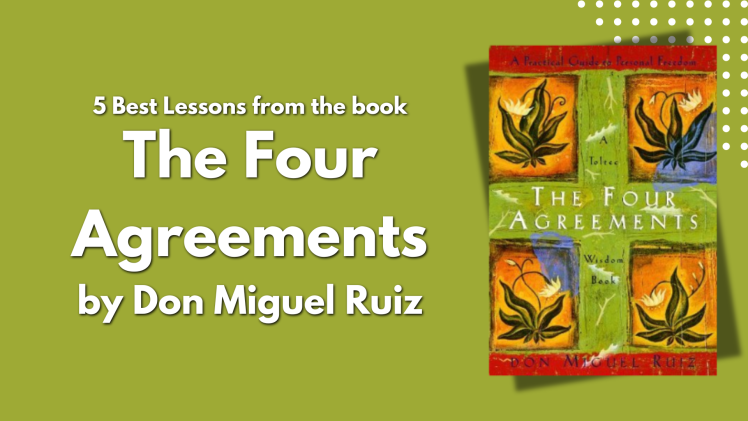
This is exactly what Don Miguel Ruiz lays out in The Four Agreements. It’s not just a book—it’s a manual for breaking free from self-imposed limitations and stepping into a life of personal freedom.
And today, we’re diving deep into the five most powerful lessons from this life-changing book.
Let’s get started.
Editor’s note: This list is intended to be used for informational purposes only. I don’t necessarily agree with all details written in the books featured here. You can go through your chosen book from our list and determine the best insights you can get.
Moreover, I am an Amazon Affiliate Program participant. As an Amazon Associate, I earn from qualifying purchases at no additional cost to you. I would highly appreciate it if you buy books through my site. Thank you!
Lesson 1: Be Impeccable with Your Word—Your Words Shape Your Reality
Words are powerful. They can lift someone up or tear them down.
And yet, most of us throw them around carelessly—sometimes against others, but more often, against ourselves.
Ruiz’s first agreement is simple but profound: Be impeccable with your word.
This means speaking with integrity, avoiding gossip, and—most importantly—not using your words against yourself.
Real-Life Example:
Imagine someone told you as a child that you were “bad at math.” Even if it wasn’t true, you might have internalized it, and it became part of your identity.
You might have avoided math altogether, limiting your own potential—not because you were bad at it, but because you believed it.
Now, flip the script. What if someone had consistently told you, “You’re a great problem solver. You can figure anything out.” That belief could have shaped an entirely different path.
Words plant seeds in our minds—make sure you’re planting the right ones.
Speak kindly to yourself. Choose words that empower you.
Quick Takeaway:
- Speak with honesty, but with kindness.
- Avoid negative self-talk and replace it with affirmations.
- Stop gossiping—it only spreads negativity.
Lesson 2: Don’t Take Anything Personally—It’s Not About You
Most of our emotional pain comes from taking things personally. Someone criticizes you? You assume it’s about you. Someone is rude to you? You think they must hate you. But Ruiz teaches us a liberating truth: Nothing others do is because of you—it’s because of them.
People act based on their own beliefs, fears, and conditioning. Their reactions are their reality, not yours.
Real-Life Example:
You text a friend, and they don’t respond. You start overthinking. Did I say something wrong? Are they mad at me?
But in reality, they were just busy. Maybe they had a tough day. Maybe their phone died. It had nothing to do with you.
Quick Takeaway:
- People’s actions reflect their own inner world, not your worth.
- When someone insults you, they are revealing who they are, not who you are.
- Let go of the need for external validation—your opinion of yourself matters most.
Top 3 Best Self-Help Books for May 2025


Lesson 3: Don’t Make Assumptions—Ask and Clarify Instead
How many times have you assumed something and been completely wrong?
Ruiz’s third agreement is a game-changer: Stop making assumptions. Instead of jumping to conclusions, ask questions, clarify situations, and communicate clearly.
Real-Life Example:
Imagine you’re walking down the street and you see an old friend across the road. You smile and wave—but they don’t wave back.
Your mind goes into overdrive: Did I do something wrong? Are they mad at me?
But maybe they just didn’t see you. Instead of making assumptions, the simple solution would be to check in: “Hey, I saw you earlier! Hope everything’s good.”
Clarity removes unnecessary suffering.
Quick Takeaway:
- If you don’t know something, ask instead of assuming.
- Clear communication prevents misunderstandings.
- People are not mind-readers—tell them how you feel.
Lesson 4: Always Do Your Best—Your Best Changes Every Day
This agreement ties everything together. Ruiz emphasizes that your best effort will look different every day—and that’s okay.
Some days, your best will be full of energy and productivity.
Other days, just getting out of bed might be your best. The key is to accept whatever your best looks like in the moment—without self-judgment.
Real-Life Example:
Let’s say you’re working on a personal project, but you’re exhausted from a long day. Your best today might be just writing one paragraph. That’s okay! If you keep showing up, even in small ways, you’ll make progress.
On the flip side, if you push yourself too hard and burn out, you won’t be able to do your best tomorrow.
Quick Takeaway:
- Accept that your best will fluctuate.
- Show up consistently, even if it’s just a little.
- Avoid perfectionism—progress is more important than perfection.
Lesson 5: Break Free from Limiting Beliefs—You Are Not Your Past
One of the biggest lessons from The Four Agreements is that most of our suffering comes from false beliefs we’ve adopted over time.
We’ve been “domesticated” since childhood—taught to believe certain things about ourselves and the world, often without questioning them.
Ruiz calls these self-limiting agreements, and they keep us trapped in fear, self-doubt, and emotional pain.
But here’s the good news: You can break them.
Real-Life Example:
Imagine you’ve always been told that you’re “shy” or “not good with people.” So you avoid social situations, believing that’s just “who you are.”
But what if that’s just an outdated belief? What if you started challenging it—speaking up a little more each day, stepping out of your comfort zone?
The truth is, you are not your past. You can rewrite your story.
Quick Takeaway:
- Question beliefs that limit you—who told you that was true?
- You are not stuck—growth is always possible.
- Your identity is not fixed—you can redefine yourself at any time.
Final Thoughts: Transform Your Life, One Agreement at a Time
The Four Agreements isn’t just a book—it’s a roadmap to personal freedom. If you apply these lessons, you’ll experience less stress, less drama, and more inner peace.
Let’s recap:
- Be impeccable with your word—your words shape your life.
- Don’t take things personally—what others say is about them, not you.
- Don’t make assumptions—seek clarity, not confusion.
- Always do your best—your best will change daily, and that’s okay.
- Break free from limiting beliefs—you are not your past.
These agreements will challenge you.
But if you commit to them, even imperfectly, you’ll start to notice a shift.
You’ll react differently.
You’ll feel lighter.
And most importantly—you’ll be free.
So, which agreement resonates with you the most?
Drop a comment below—I’d love to hear your thoughts!
If you wish to learn more, get a copy of The Four Agreements on Amazon Now!

Discover more from Books for Greatness
Subscribe to get the latest posts sent to your email.
